
Rotary File
Showing all 9 results
-
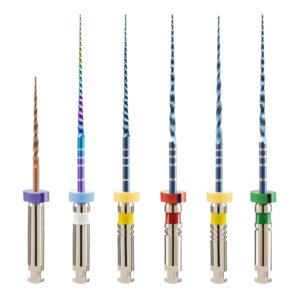
EZ-Shaper PRO
Original price was: $36.00.$26.00Current price is: $26.00. Buy Now This product has multiple variants. The options may be chosen on the product pageEZ-SHAPER PRO® an innovative 6-file rotary system designed by Dr. Kalantar Motamedi for conservative endodontic shaping of calcified and severely curved canals. It delivers predictable performance, high flexibility, and safe canal preparation in complex clinical cases.
6 Files Per Package
-

Super-Flexi Gold
Original price was: $35.00.$25.00Current price is: $25.00. Buy Now This product has multiple variants. The options may be chosen on the product pageSuper-Flexi Gold® controlled memory NiTi rotary files provide exceptional flexibility and high resistance to fracture for safe shaping of curved and complex root canals.
Ideal as an everyday endodontic rotary file system for single-length or crown-down techniques, with 6 pre-sterilized files per pack (300–400 rpm, 2–3 N·cm).
-
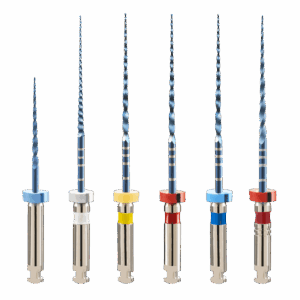
Super-Flexi Blue
Original price was: $35.00.$25.00Current price is: $25.00. Buy Now This product has multiple variants. The options may be chosen on the product pageSuper-Flexi Blue® controlled memory files are highly flexible and exceptionally safe for navigating complex and curved root canals.
6 Files Per Package
-
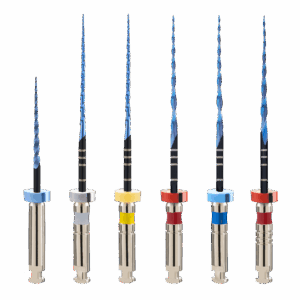
Ino-Shaper
Original price was: $35.00.$25.00Current price is: $25.00. Buy Now This product has multiple variants. The options may be chosen on the product pageIno-Shaper® files are known for high cutting efficiency. At the same time, blue controlled memory material makes them flexible.
6 Files Per Package
-
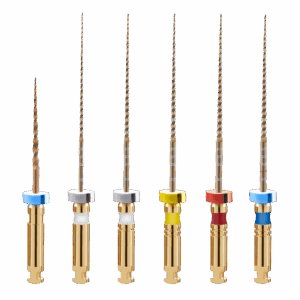
Sup-Path PRO
Original price was: $33.00.$23.00Current price is: $23.00. Buy Now This product has multiple variants. The options may be chosen on the product pageDesigned with a regressive taper, Sup-Path PRO allows deep apical shaping while preserving pericervical dentin.
6 Files Per Package
-
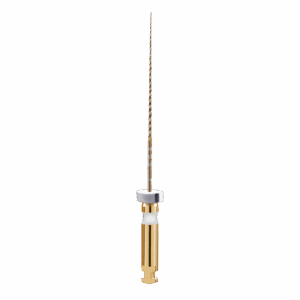
Entrance (15/03)
Original price was: $33.00.$23.00Current price is: $23.00. Buy Now This product has multiple variants. The options may be chosen on the product pageEntrance files (also referred to as glidepath file) are suitable for the establishment of a fast and reliable glide path.
6 Files Per Package
-
EZ1
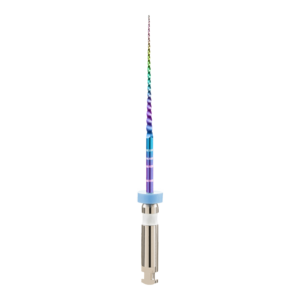
Original price was: $36.00.$26.00Current price is: $26.00. Buy Now This product has multiple variants. The options may be chosen on the product pageEZ1® is a progressive taper glide path file with a rainbow-like color, from the deposition of a diamond-like carbon (DLC) coating.
5 Files Per Package
-
Recip-One
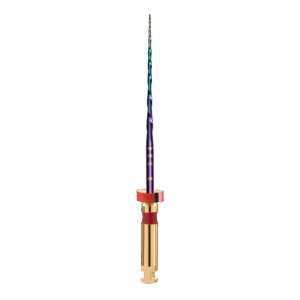
Original price was: $35.00.$25.00Current price is: $25.00. Buy Now This product has multiple variants. The options may be chosen on the product pageEfficient shaping with single-file reciprocation. Designed with nano DLC coating for primary and retreatment cases.
6 Files Per Package
-
EZ-Shaper
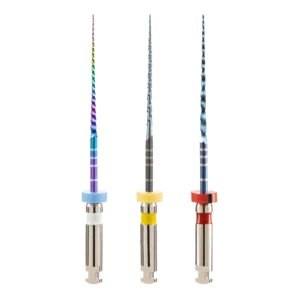
Original price was: $36.00.$26.00Current price is: $26.00. Buy Now This product has multiple variants. The options may be chosen on the product pageAn innovative and conservative 3-file kit designed by Dr. Kalantar Motamedi for preparation of calcified and curved canals.
5/6 Files Per Package
About Flexivo Dental Files
One of the first questions typically asked when introducing rotary file is about their material. Commonly, dental rotary files are made from nickel-titanium (NiTi) alloy. In the past, hand files were mainly made from stainless steel, but today, dental rotary files are typically produced from NiTi.
Importantly, our NiTi rotary files undergo heat treatment before use. They are made from NiTi wires that are shaped into files after the rotary process. A special type of this wire, known as CM Wire (Controlled Memory Wire), is used. Therefore, our rotary file endos are made from heat-treated NiTi CM Wire, which also has controlled memory properties — meaning they do not return to their original shape after bending. This unique feature allows the rotary file dental to adapt better to the curvature of dental canals, enabling more effective treatment performance.
One of the visible features of NiTi rotary files is their different colors — some are gold, some blue, and others have a rainbow-like or aurora-like spectrum. The gold and blue colors are the result of an oxide layer formed during heat treatment on the file surface. However, the rainbow-like color of some of our endodontic rotary files (EZ1 and Recip-ONE) is due to a special DLC (Diamond-Like Carbon) coating applied via an ion-based process.
The DLC coating offers several benefits:
- Smoother, more uniform surface
- Increased resistance to fracture
- Improved cutting efficiency
All EZ1 and Recip-ONE files, in addition to heat treatment and controlled memory properties, also have DLC coating. This nanocoating is the only structural difference compared to other rotary files.
Flexivo Dental File color coding System:
Blue indicates greater flexibility than gold. For this reason, blue rotary files like EZ-Shaper are recommended for curved canals, as they bend more easily and adapt without breaking in complex anatomies. In contrast, gold files have higher cutting efficiency (meaning they may act more aggressively, removing more dentin from canal walls in less time) but are slightly less flexible.
Flexivo Dental File sizes and tapers:
The widest range of tip sizes and tapers is available in our Super-Flexi files (sizes 15 to 40).
In general, there are two taper designs:
1-Constant/Fixed Taper: The diameter increases evenly along the file. Most of our dental rotary files have this design.
2-Variable Taper: With two subtypes:
- Progressive Taper: Taper increases from the tip toward the shank (e.g., EZ1).
- Regressive Taper: Taper is greater at the tip and decreases toward the shank (e.g., Sup-Path Pro).
Flexivo Dental File cross-section:
The initial NiTi rotary files in our systems (lengths 17 mm and 19 mm) are called Orifice Shapers or Orifice Openers. These rotary file dentals are usually present in all systems, and enlarge the coronal canal entrance to make the canal path more visible and accessible. Their cross-section in all our systems is convex triangular, chosen to enhance cutting power. therefore, our Orifice Opener files have high cutting efficiency.
Other rotary files in our systems may have rectangular, square, or S-shaped cross-sections, depending on the system. This variety directly affects cutting performance, flexibility, and canal control.
Recommended speed and torque:
- Torque: 2–3 N·cm
- Speed: 300–400 rpm
For example, Dr. Kalantar Motamedi uses 400 rpm and 2.5 N·cm for file operation.
Types of Rotary Files We Offer
1-Super-Flexi Gold & Super-Flexi Blue
Highly versatile and among our best-selling dental rotary files. They perform well in a wide range of endodontic cases — from simple to severely curved or calcified canals. High flexibility, logical taper design, ease of handling, and good fracture resistance are among the features that make this file one of the main choices in many endodontic treatments.
In the Super-Flexi system, the cross-section is mostly rectangular and, in some cases (size 15/.04), square. The taper is constant at 4%, except size 25/.06. Gold is the main color, but larger sizes (35/.04 and 40/.04) are blue for extra flexibility. The reason for this choice is that as the file size increases, its flexibility decreases; therefore, to prevent a reduction in toughness (resilience), these sizes are produced with Blue rotary file technology to provide greater flexibility. These files have exceptional resistance to cyclic fatigue; a factor that plays a decisive role in increasing the safety of the instrument during the preparation of curved canals.
A published study showed that the Super-Flexi rotary file has much higher cyclic fatigue resistance than well-known files. Its strong mechanical properties make it a safe and reliable choice for endodontic treatments. Clinicians find it especially effective in severely curved canals.
Super-Flexi have non-cutting safety tips to reduce canal transportation, and are available in Gold (which is a reliable choice for clinicians seeking consistent performance and high durability.) and Blue (which is an advanced option for clinicians who seek maximum ability in navigating the canal with high safety and control.).
Super-Flexi is Suitable for both single-length and crown-down techniques, and are provided in sterile packaging to maintain safety in the treatment environment.
2-EZ-Shaper
Designed by Dr. Kalantar Motamedi with a conservative design to reduce the number of files needed. This system is essentially a kit consisting of three main files (EZ1, EZ2, and EZ3) along with two auxiliary files: an Opener file (15/.07) for starting the procedure and easier canal entry, and a 35/.03 file for increasing the apical size of the canal in cases where more shaping is required at the canal end. In fact, the goal of this system is to reduce the total number of dental rotary files needed by the clinician. EZ-Shaper, due to its initial glide path which provides good cutting and penetration, is designed for canals with severe curvature and canals with heavy calcification. In this system, the glide-path file refers to EZ1.
The EZ1 rotary file, with its nano DLC coating and rainbow color, provides high resistance against cyclic fatigue and paves the way for the effective use of subsequent files. This coating also increases the cutting efficiency of the file. The EZ2 and EZ3 files, which are Blue-treated, demonstrate good performance in passing through difficult canals due to their high flexibility. The non-cutting tip of these files prevents unwanted canal transportation and enhances procedural safety.
In many treatments, the use of only two NiTi rotary files, EZ1 and EZ3, is sufficient. However, for more complex cases, it is recommended to use EZ1, EZ2, and EZ3 in sequence. The EZx file is also an excellent option for preparing MB2 canals. In addition, the EZ4 file, with a size of 35/.03, is suggested as an apical finisher for the treatment of necrotic canals.
EZ-Shaper files can be used with both single-length and crown-down techniques and are provided in sterile packaging to ensure the safety of the treatment environment.
Comparison of the Super-Flexi and EZ-Shaper systems:
The Super-Flexi file, as a versatile option, is considered a suitable choice for a wide range of cases, from simple to complex. In contrast, the EZ-Shaper file, with its specialized design, offers remarkable performance particularly in the treatment of difficult, calcified, and severely curved canals.
3-Ino-Shaper
The Ino-Shaper has an S-shaped cross-section, and compared to the Super-Flexi and EZ-Shaper files, which offer greater flexibility, the Ino-Shaper provides superior performance in cutting efficiency. However, due to the use of Blue NiTi alloy, this file, while maintaining high cutting efficiency, also possesses acceptable flexibility, making it a balanced option for endodontic treatments. The main difference of this system compared to others lies in its high cutting efficiency.
The Ino-Shaper file is designed for both primary and retreatment procedures and is considered a very suitable option for calcified canals due to its high cutting efficiency. This file is an ideal choice for clinicians who prioritize cutting efficiency and seek greater speed and precision in root canal treatment.
The Ino-Shaper is more suitable for experienced clinicians, and with its non-cutting safety tip, it prevents unwanted canal transportation. This file is offered with a fixed 4% taper, except for the specific size 25/.06, which has a 6% taper.
Ino-Shaper files can be used with both single-length and crown-down techniques and are provided in sterile packaging to ensure the safety of the treatment environment.
4-Entrance
The Entrance file is one of the specialized products designed to create a rapid, safe, and effective glide path in the initial stages of endodontic treatment. This file is made from nickel-titanium alloy with controlled memory, which provides high flexibility and suitable mechanical resistance against fracture, and it comes in a gold color. These features, along with precise geometric design, increase cutting efficiency and facilitate the advancement of the file in complex canals.
The tip of the file is designed to be non-cutting, which minimizes the risk of transportation or alteration of the canal path. It is recommended to use a No. 10 hand file before employing the Entrance file, in order to ensure more precise entry into the canal. Structurally, the Entrance file has a fixed 3% taper.
5-Sup-Path Pro
The Sup-Path Pro file has a regressive taper design, such that in the apical one-third of the canal (the 4 mm at the file tip), the taper is 4% and 6%, and then the taper gradually decreases. Therefore, the apical one-third of the canal can be shaped properly (deep apical shaping). This design minimizes dentin removal in the coronal regions, especially in the sensitive peri-cervical dentin (PCD) area. In other words, by preserving more of the dental structure in the PCD region, these files are aligned with the principles of minimally invasive treatment.
It should be noted that the concept of ‘minimally invasive’ is different from ‘conservative’; for example, while the EZ-Shaper has a conservative design, the Sup-Path Pro, with even less invasiveness, creates very limited and precise shaping in the canal and is therefore considered minimally invasive. Accordingly, the Sup-Path Pro file is an ideal choice for clinicians who use technologies such as laser activation or GentleWave and seek canal preparation with the least possible invasiveness.
In this regard, some clinicians who focus on conservative design may raise more specialized questions.
5-Recip-ONE
It is of the reciprocating type (with back-and-forth motion) and is made of controlled memory NiTi alloy with high flexibility. Recip-ONE files are provided in sterile packaging to ensure treatment safety. This file has a DLC coating (similar to EZ1).
Recip-ONE is designed for both primary and retreatment procedures and is capable of effectively removing filling materials such as gutta-percha and sealer. Its non-cutting tip is designed to reduce the likelihood of transportation or canal deviation and to enhance treatment safety.
In terms of cross-section, this file has an S-shaped cross-section. However, the main difference of the Recip-ONE file lies in its surface coating. This file is covered with a nano DLC (Diamond-Like Carbon) coating, which not only increases its resistance to fracture and improves its cutting efficiency, but also gives it its rainbow-like appearance.
An important point regarding the Recip-ONE file is its capability of being used in both primary treatments and retreatments. This feature is provided by the combination of its alloy type and design, which enables the effective removal of previous filling materials such as gutta-percha, sealer, and other obturation materials. Therefore, due to its durable structure and specialized design, Recip-ONE is considered a reliable option for both types of treatments.
Usage Techniques
Clinicians can use either the Single Length or Crown Down technique, depending on the case. In simple or moderate canals without major complexity, they use the Single Length method. This method introduces rotary files in sequence, from smaller to larger sizes. The process continues until the file reaches the full working length of the canal.
On the other hand, when dealing with more complex canals, all files in this system can also be used with the Crown Down technique. In this method, the coronal area is prepared first, and then the shaping process continues toward the apical area.
In both techniques, the procedure begins with a hand file. Hand files generally start from size 6 (6, 8, 10, and so on). However, to begin the canal preparation process, a No. 10 hand file (No. 10 K-file) is usually used, which advances to the full working length of the canal and opens the initial pathway for the rotary files. Clinically, this is also considered safe. In most cases, there is no need to use larger hand files at the initial stage.
After creating the initial pathway, the use of rotary file dental becomes possible. The hand files used in this stage are also referred to as hand files or manual files.
Have specific gutta-percha or master cones been made for our files?
The answer is that in most cases, the files offered in these systems do not require dedicated gutta-percha. The main reason for this is that most of the files use a fixed taper design. This feature allows the clinician to use common gutta-percha points available in the market, which also have fixed tapers, without the need for exclusive or proprietary gutta-percha.
In contrast, files that have a variable (regressive/variable) taper, due to their structural design differences, do not fully match standard gutta-percha points. In such cases, the production of gutta-percha specifically designed to match the geometry of the endodontic rotary file by the manufacturer becomes necessary.
For example, in systems such as Super-Flexi and EZ-Shaper, the final file has a fixed taper. Therefore, selecting gutta-percha of the same size and taper as the last rotary file endo used (for instance, using a 25/.04 gutta-percha after using a 25/.04 file) is possible and ensures high accuracy in canal filling.
The only exception in this regard is the Sub-Path Pro files, which, due to their variable taper and regressive design, are not fully compatible with standard gutta-percha available on the market. In these cases, it is recommended to use gutta-percha points with a taper similar to the system.
Obturation Techniques
Which obturation technique is more suitable for use with our files?
Although the choice of obturation method is a specialized matter and depends on the clinician’s judgment and preference, providing some general information may be helpful. As technical consultants, we do not offer direct clinical recommendations; however, mentioning common and practical methods, especially for less-experienced users, can be useful.
One point that should always be kept in mind is that most of our files have a 4% taper and are not highly aggressive with large tapers. As a result, the Single Cone technique in obturation is usually recognized as a simple, safe, and effective option.
In addition, combining this method with the use of a bio-ceramic sealer can improve canal adaptation and sealing.
Therefore, it can generally be stated:
‘The Single Cone technique combined with a bio-ceramic sealer is considered suitable for root canal obturation with our files.’
However, it is essential to emphasize that the final choice of obturation method entirely depends on the clinician’s preference, experience, and evaluation of the treatment conditions. What has been presented here is only a commonly suggested and reliable approach in most cases.
7-Glide-Path Files
within our range of rotary file endos, we offer three types of Glide-Path files with different designs to meet various clinical needs. This design variety allows for precise selection based on the clinician’s preferences and the treatment case:
- Glide-Path with fixed taper:
The Entrance file, size 15/.03, falls into this category. With its fixed taper and small diameter, this file is a safe, predictable, and suitable option for creating the initial glide path in most cases. - Glide-Path with progressive taper:
This design is applied in the EZ1 file, which has a progressive taper structure. - Glide-Path with regressive taper:
This design is seen in the Sup-Path Pro file. This file has the specification of a 17/.04% regressive taper, in which the taper is greater at the tip and gradually decreases toward the coronal region.
Therefore, it can be confidently stated:
We offer all three types of Glide-Path files with Fixed, Progressive, and Regressive designs in our collection, providing complete coverage of clinical needs in this area.
The EZ1 file is suitable for creating a glide path in canals with mild to moderate curvature. However, the EZ1 file has two fundamental and important functional differences compared to the same files:
- Controlled Memory Alloy:
- In contrast, the EZ1 uses heat-treated controlled memory alloy, which provides greater flexibility and retains its shape after bending. This feature allows for better adaptation to complex canal anatomies.
- DLC (Diamond-Like Carbon) Coating:
- The EZ1 file has a nanocrystalline DLC surface coating, which significantly increases its resistance to fracture.
- This coating also noticeably improves cutting efficiency and reduces friction along the canal path — advantages that are not present in same files.
Recommended Usage Frequency of Our Files
This question does not have a fixed numerical answer. Many factors affect the durability and lifespan of a file. These include canal complexity, curvature, technique, pressure, and the clinician’s experience.
Under normal conditions with controlled pressure, clinicians can safely use these files about 3 to 4 times.
In complex anatomies such as narrow, calcified, or severely curved canals, clinicians should use each rotary file only once. This prevents the risk of fracture.
Members of the Advisory Board, including Dr. Nazeri and Dr. Kalantar Motamedi, have shared their experiences. In some cases, they used the files six to eight times without fracture. However, this matter is entirely dependent on the clinician’s skill and judgment, the method of use, and the anatomical characteristics of the canal.
In conclusion, our general recommendation for safe and standard use is 3 to 4 times. Usage beyond this range is advisable only if the clinician has complete proficiency and carefully evaluates the clinical conditions.
Competitive advantages of our files compared to leading market brands
Although the files we provide possess very high resistance to fracture from cyclic fatigue, their pricing remains entirely economical and competitive.
Two published articles compared the cyclic fatigue resistance of these files with leading market brands. The results confirmed the clear superiority of our files. Researchers also ran many laboratory tests under controlled conditions. They compared our files with products from recognized brands. The results showed higher durability and stronger mechanical resistance in our files.
These features enable clinicians, by using our files, to benefit simultaneously from higher quality compared to competitive brands and significantly more affordable pricing.
As a result, not only is the use of these files clinically safe and reliable, but their economic pricing also allows limited use and early replacement of files without financial burden — a factor that plays an important role in reducing fracture risk and increasing treatment safety.
History of Rotary Files
In modern dentistry, endodontic rotary files are a major advancement in root canal treatment. They have reshaped the way clinicians manage complex canal anatomies. Unlike traditional manual files that depend on hand control, rotary systems are engine-driven. This provides greater precision, efficiency, and consistency. Most rotary files are made from nickel–titanium (NiTi) alloys. This material offers both flexibility and strength. It allows safe navigation of curved canals while lowering the risk of ledging or file separation.
The transition from stainless-steel manual instruments to NiTi rotary systems represents far more than convenience. Manual files, though reliable, are inherently rigid and struggle to adapt to canal curvatures. This often leads to errors such as canal transportation or even perforation. Rotary systems use NiTi’s superelasticity to follow the canal’s natural shape. This helps preserve dentin and lowers the risk of errors.
Efficiency is another defining benefit. Studies consistently show that rotary file systems clean and shape canals more effectively and in less time than manual instruments. Their mechanical design—particularly the cutting flutes—ensures uniform shaping and thorough debridement, which improves both disinfection and the subsequent obturation phase.
Safety has also advanced with modern rotary technology. Features such as torque control, auto-reverse functions, and variable tapers protect against instrument fracture and enhance procedural control. The continuous rotary motion reduces operator fatigue, enabling more accurate and deliberate treatment.
Nevertheless, optimal results demand proper training and adherence to clinical protocols. Mastering glide path creation, appropriate file sequencing, irrigation, and strict sterilization practices is essential for safe, effective use.
Ultimately, the integration of rotary file systems marks a paradigm shift in endodontics. By merging technological innovation with clinical precision, these systems elevate treatment outcomes and set a higher standard of care, solidifying their critical role in contemporary dental practice.
Materials used in Rotary Files
The materials used in the fabrication of endodontic rotary files are critical determinants of their performance, durability, and adaptability in clinical practice. Advances in material science have progressively enhanced the safety, efficiency, and reliability of rotary instrumentation.
Stainless steel was the original material for endodontic files. While it offered strength and rigidity, its limited flexibility made it poorly suited for navigating curved canals. This often resulted in procedural errors such as canal transportation, ledging, or even perforation.
The introduction of nickel–titanium alloys revolutionized endodontics. NiTi’s unique superelasticity and shape memory allow files to flex within curved canals without permanent deformation. This adaptability reduces the risk of canal aberrations, minimizes dentin removal, and enhances overall treatment safety.
So, heat-treated NiTi alloys have further improved clinical performance. Treatments such as M-Wire, CM-Wire, and Gold Wire change the crystalline structure of the alloy. They increase flexibility and improve resistance to cyclic fatigue. CM-Wire, for example, shows controlled memory. It allows files to adapt to complex canal shapes and return to their original form after use.
Gold Wire undergoes proprietary heat treatment that produces superior flexibility and fatigue resistance, making it particularly effective for challenging anatomies. Similarly, Blue Wire offers high fatigue resistance and a protective oxide layer. This layer increases flexibility and improves corrosion resistance. It also extends the lifespan of the instrument.
These advancements give clinicians more choice. They can select rotary files that match specific clinical needs, from simple canals to complex cases. The resulting improvements in shaping efficiency, safety, and predictability have elevated the overall success rates of root canal therapy.
In summary, the evolution from rigid stainless steel to advanced heat-treated NiTi alloys represents a pivotal progression in endodontic practice. Understanding these material differences enables clinicians to make informed choices, ultimately optimizing both procedural outcomes and patient care.
Design Features and Types of Rotary Files
The design features of dental rotary files are fundamental to their performance, efficiency, and safety in endodontic treatment.
Taper, tip design, cross-sectional shape, cutting edges, motion type, and material treatment determine how well a file shapes and cleans the canal.
Taper shows how the file’s diameter increases from tip to handle. The standard taper is 0.02 mm/mm. Many modern systems use larger or variable tapers, such as 0.04 or 0.06 mm/mm. These tapers improve shaping efficiency, keep flexibility, and lower the risk of transportation.
Tip design also plays a critical role. Active tips with cutting edges can penetrate calcified or constricted canals but carry a higher risk of apical transportation. Non-active tips, in contrast, are rounded and follow the canal path passively, offering greater safety in delicate anatomy.
The cross-sectional shape of a file impacts cutting ability, flexibility, and debris removal. Triangular sections maximize sharpness and debris clearance, square sections increase resistance to torsional stress, while S-shaped geometries aim for a balance between efficiency and adaptability.
Cutting edges influence aggressiveness and safety. Positive rake angles provide faster dentin removal, whereas negative rake angles cut more conservatively, minimizing aberrations. Flute number and arrangement further affect debris evacuation and file flexibility.
In terms of motion kinematics, rotary files may operate in continuous 360° rotation, delivering consistent cutting but increasing cyclic fatigue, or in reciprocating motion, alternating directions to reduce stress and extend file life. Both approaches are effective in maintaining apical patency.
Finally, heat-treated NiTi files have emerged as a major advancement. By altering the alloy’s crystalline structure, heat treatment enhances flexibility and fatigue resistance, enabling safer navigation of curved canals compared to standard NiTi instruments.
General Guidelines for NiTi Rotary Files
Studies have shown that rotary files exhibit varying resistance to cyclic fatigue based on rotational speed. For instance, higher speeds (500–700 rpm) can reduce apical force and torque without increasing the incidence of file fracture, suggesting that increased rotational speed may be suitable under a single-use technique. However, it’s essential to balance speed and torque to maintain instrument integrity and patient safety.
Applications in Clinical Practice
In contemporary endodontics, the selection of appropriate instrumentation is paramount to achieving successful outcomes across a spectrum of clinical scenarios. Flexivo Dental offers a comprehensive range of Dental rotary files engineered to address the complexities of various root canal anatomies, including curved canals, retreatment cases, and unique tooth structures.
Navigating Curved and Complex Canals
Curved root canals present a significant challenge due to the increased risk of canal transportation and instrument separation. The Super Flexi® and EZ-Shaper® files from Flexivo Dental are specifically designed to navigate these intricate anatomies. Their enhanced flexibility and cutting efficiency allow for precise shaping while maintaining the original canal curvature, reducing the likelihood of procedural errors.
Efficient Retreatment Procedures
Retreatment cases require the effective removal of existing obturation materials and thorough cleaning of the canal system. The Recip-one file, with its reciprocating motion and DLC nano-coating, offers superior resistance and cutting efficiency, making it ideal for both primary treatments and retreatments. Its design facilitates the removal of gutta-percha and other filling materials, ensuring the canal is adequately prepared for re-obturation.
Addressing Specific Tooth Anatomies
Certain teeth, such as molars with narrow or calcified canals, demand specialized instruments for effective treatment. The Sup-Path PRO files, featuring a regressive taper and Controlled Memory (CM) wire, are tailored for minimally invasive procedures in complex cases. These files are particularly beneficial for preserving pericervical dentin and are compatible with advanced irrigation systems like GentleWave, enhancing cleaning efficacy in challenging anatomies.
Sterilization Guidelines for Rotary Files
Ensuring the sterility and structural integrity of rotary files is paramount in endodontic practice. Proper sterilization protocols and adherence to reuse guidelines not only safeguard patient health but also prolong the lifespan of these precision instruments. At Flexivo Dental, we prioritize both efficacy and safety in our rotary system offerings.
Recommended Sterilization Procedures
For the effective sterilization of endo files, the following methods are endorsed:
- Steam Autoclaving: The gold standard for sterilizing rotary files and holder dental instruments. Autoclaving at temperatures between 121°C and 135°C ensures the elimination of microbial contaminants.
- Dry Heat Sterilization: An alternative method, suitable for instruments that may be sensitive to moisture.
- Ethylene Oxide Gas: Employed for heat-sensitive instruments, though it requires longer processing times and aeration periods.
It’s imperative to clean endodontic rotary files thoroughly before sterilization to remove any organic debris, ensuring the effectiveness of the sterilization process.
Signs of Wear or Fatigue to Monitor
Regular inspection of Dental rotary files is crucial to detect early signs of fatigue or damage. Indicators include:
- Unwinding or Deformation: Changes in the file’s shape can compromise its cutting efficiency and increase fracture risk.
- Discoloration or Corrosion: Visual changes may indicate material degradation.
- Reduced Cutting Efficiency: A noticeable decline in performance suggests the file may be nearing the end of its usable life.
Utilizing rotary files and holder dental systems can aid in organizing and monitoring instrument usage, ensuring timely replacement and maintaining procedural safety.
Flexivo Dental is dedicated to providing high-quality rotary system solutions that meet the rigorous demands of modern endodontic practice. By adhering to recommended sterilization and reuse guidelines, clinicians can ensure the longevity and reliability of their instruments, ultimately enhancing patient outcomes.
Note: Always refer to the manufacturer’s instructions and current clinical guidelines when determining sterilization and reuse protocols for endodontic instruments.
Best Practices to Mitigate Risks
1-Establish a Glide Path
Before introducing rotary files, create a glide path using small, flexible hand files. This step ensures that the canal is negotiable and reduces the risk of file binding and separation.
2-Adhere to Manufacturer’s Recommendations
Each rotary file system has specific guidelines regarding speed, torque, and usage. Always follow the manufacturer’s instructions to ensure optimal performance and safety.
3-Regular Inspection of Files
Before and after each use, inspect files for signs of wear, such as unwinding, distortion, or discoloration. Discard any file that shows signs of fatigue or damage.
4-Use Controlled Motions
Employ gentle, controlled movements during instrumentation. Avoid forcing the file apically, and use a pecking motion to minimize stress on the instrument.
5-Limit File Reuse
While some practitioners may reuse rotary endo files, it’s advisable to limit their use to reduce the risk of separation. Single-use protocols can enhance patient safety.
5-Continuous Education and Training
Stay updated with the latest techniques and advancements in endodontics. Regular training ensures that practitioners are aware of potential pitfalls and the best practices to avoid them.
While endodontic rotary files have revolutionized root canal therapy, their effective and safe use requires a thorough understanding of their limitations and potential risks. By adhering to best practices and manufacturer guidelines, clinicians can mitigate complications such as file separation and canal transportation, ensuring optimal patient outcomes.
Note: Always consult the latest clinical guidelines and manufacturer instructions when using endodontic instruments.
Additional Explanations
rotary files and holder
Rotary files and holders are essential tools in modern endodontics. They ensure precision, safety, and efficiency during root canal treatments. Rotary files use nickel–titanium (NiTi) or stainless steel. These engine-driven instruments shape and clean canals with accuracy. Variable tapers, sharp cutting edges, and specialized tips keep the file centered. They also remove debris effectively and reduce the risk of transportation or perforation.
Rotary file holders play a key role in clinical organization and infection control. Manufacturers use durable, autoclavable materials such as stainless steel, silicone, or high-grade plastic. These holders keep files secure, accessible, and sterile. Many models use color-coding for quick size identification. Advanced holders add magnetic bases, detachable trays, or labeled compartments for specific file systems. These features streamline workflow and improve safety.
For complex canals, specialized rotary files like Flexivo Dental’s Super Flexi® give superior flexibility and fatigue resistance. A strong holder keeps files arranged and ensures safe handling throughout the procedure.
Rotary circular Files
Rotary circular files are specialized endodontic instruments. Clinicians use them in root canal therapy to shape and clean the canal system. Unlike hand files, these engine-driven instruments rotate continuously. This motion gives greater efficiency, precision, and consistency. Most rotary circular files use nickel–titanium (NiTi) alloys. NiTi provides flexibility and strength to safely navigate complex canal anatomies.
Several design features contribute to their effectiveness.
-
Tip size and taper determine the diameter at the file’s tip and the rate of widening along its working surface. Compared to manual files, rotary circular files often employ larger or variable tapers, enabling more efficient shaping while maintaining canal centering.
-
Flutes and helix angle form the cutting edges and create pathways for debris removal. The helix angle influences how debris is lifted coronally and dictates the file’s cutting behavior during rotation.
-
Material properties of NiTi—particularly superelasticity and shape memory—allow the file to flex and adapt to canal curvature without permanent deformation. This reduces the risk of canal transportation, ledging, or file fracture.
Advancements in design have produced sequential systems that include files such as SX, S1, S2, F1, F2, and F3, each intended for specific stages of canal preparation. These progress from coronal flaring to apical shaping, ensuring systematic cleaning and uniform shaping of the canal.
Rotary circular files have revolutionized endodontics. They improve efficiency, safety, and predictability. Their design reduces operator fatigue and improves debridement. They also create more consistent obturation. However, risks remain. Cyclic fatigue or torsional stress can cause instrument separation. Clinicians must train properly, follow manufacturer guidelines, and inspect instruments regularly.
Rotary circular files are integral to contemporary root canal therapy, offering significant advantages over manual instrumentation and setting a higher standard of care in endodontic practice.
Rotary File rack
A rotary file rack is an essential tool in endodontic practice. It stores and manages rotary files securely during procedures. Manufacturers use autoclavable materials such as stainless steel, silicone, or high-grade plastic. These materials ensure durability and meet sterilization standards.
The rack’s main function is to keep files organized and accessible. Designated slots or compartments hold different file sizes and types. Clinicians can quickly identify and retrieve the right file. This organization improves efficiency and lowers the risk of cross-contamination.
Innovative designs let clinicians place, store, measure, and clean endodontic hand and rotary instruments in the operating field. This reduces the need to pass sharps between dentists and staff.
A rotary file rack streamlines workflow. It also supports high standards of infection control and instrument management.
rotary file storage
Rotary file storage is critical in endodontic practice. It keeps rotary files organized, sterile, and ready for use. Proper storage improves workflow efficiency. It also supports infection control and extends the lifespan of these delicate instruments.
Effective rotary file storage solutions, such as dedicated organizers and caddies, provide designated compartments for different file sizes and types. This organization facilitates quick identification and retrieval during procedures, reducing chair time and minimizing the risk of errors. Moreover, these storage systems often incorporate features that allow for the safe sterilization of files within the same unit, streamlining the sterilization process and maintaining aseptic conditions.
Rotary file storage systems improve efficiency in the dental operatory. They also support high standards of patient safety and instrument care. Quality storage solutions keep rotary files well-maintained and easy to access. They also ensure compliance with sterilization protocols. Together, these factors contribute to successful endodontic outcomes.
Conclusion
Throughout this comprehensive guide, we have explored the pivotal aspects of endodontic rotary file systems, from material composition and design features to optimal speed, torque, and sterilization protocols. Flexivo Dental, based in California, stands out as a premier provider of high-quality NiTi rotary files, offering a diverse range tailored to various clinical needs — from complex retreatments to minimally invasive shaping.
Key advantages of Flexivo Dental rotary files include exceptional flexibility, enhanced cutting efficiency, and advanced fatigue resistance, particularly evident in products like the Super Flexi®, Sup-Path PRO, and Recip-one. Unlike other systems, Flexivo Dental prioritizes safety with stringent sterilization guidelines and controlled reuse recommendations, reducing risks like file separation and canal transportation.
