
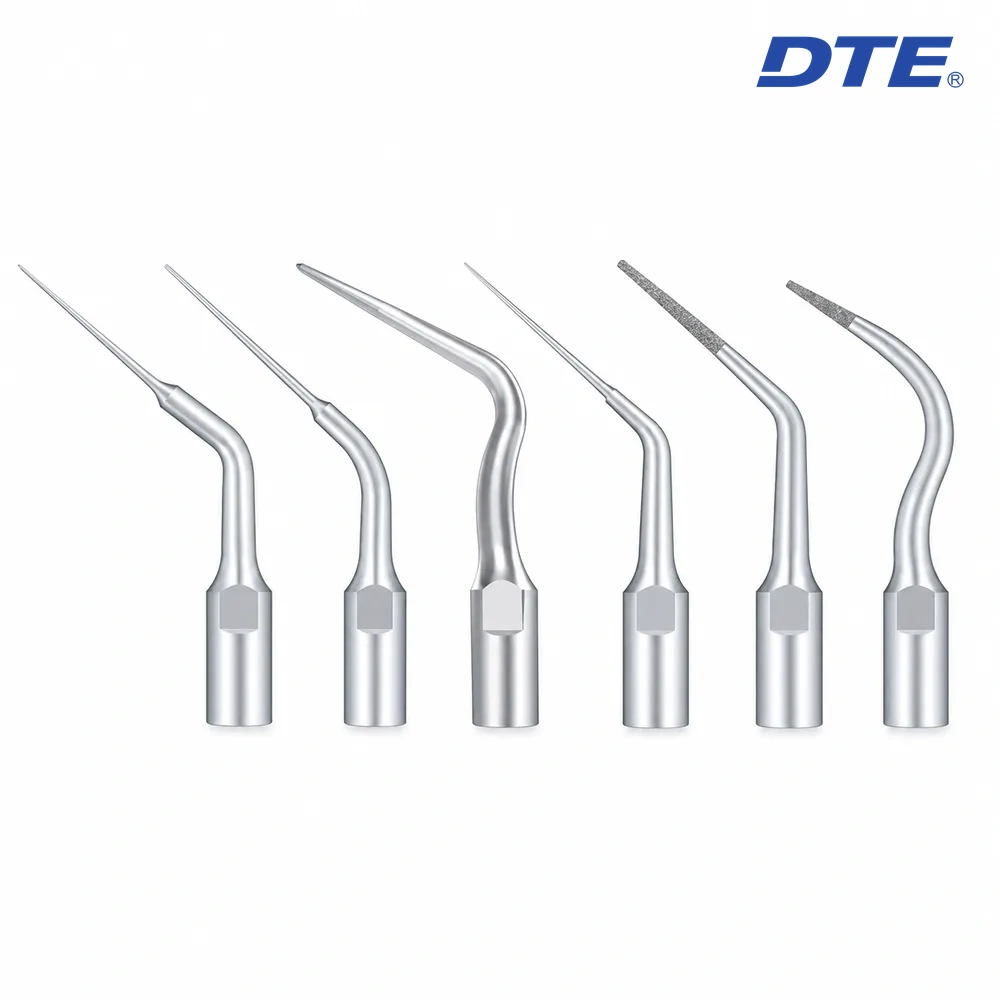
Woodpecker DTE Endodontic Ultrasonic Tips
Original price was: $44.$29Current price is: $29.
.product.post-57495 .summary.entry-summary{display:flex!important;flex-direction:column!important;align-items:stretch!important}.product.post-57495 .summary.entry-summary>*{order:5!important}.product.post-57495 .summary.entry-summary>.product_title{order:1!important}.product.post-57495 .summary.entry-summary>.price{order:2!important}.product.post-57495 .summary.entry-summary>.woocommerce-product-details__short-description{display:block!important;order:3!important}.product.post-57495 .summary.entry-summary>form.cart{order:4!important}
DTE endodontic ultrasonic tips with a DTE / Satelec-type connection, compatible with DTE, Satelec/Acteon, and NSK ultrasonic scalers.
Compatibility Notice: Not compatible with EMS or Woodpecker-thread handpieces. Please check your handpiece model and connection type before ordering.
Packaging: 1 tip per pack.
Description
DTE Endodontic Ultrasonic Tips
Designed for compatibility with ِِDTE, Satelec/Acteon, and NSK ultrasonic scalers, this comprehensive range includes specialized models for various endodontic procedures, including irrigation activation, file and foreign body removal, retreatment, calcified canal negotiation, and surgical retro-preparation.
Packaging: 1 tip per pack.
Irrigation
ED60 – Gentle, non-cutting spiral tip for irrigation of canals prepared to sizes 30–50.
ED62 – Non-tapered (0% taper) tip for ultrasonic irrigation.
File & Foreign Body Removal
ED6 – Ø0.3 mm tip for deep canal access.
ED7 – Ø0.3 mm tip for coronal third procedures.
ED14 – Ø0.4 mm tip for broken file removal in long canals.
Retreatment, Calcification & Access Refinement
ED3D – Ø0.7 mm tip for pulp chamber calcification and fiber post removal.
ED4D – 40 µm diamond-coated tip with 15 mm diamond-coated length for middle and apical third procedures.
PD4D – 40 µm diamond-coated tip for canal orifice location and pulp chamber calcification removal.
ED28 – Conical tip for locating and opening canal orifices.
ED17 – Tip with 15 micro-washers (Ø1.0 mm) for canal locating and access cavity wall refinement.
ED18 – Tip with 12 micro-washers (Ø0.6 mm) for canal locating and fiber post removal.
DTE is Woodpecker’s Satelec-fit tip line; these tips do not fit EMS/Woodpecker-thread scalers.
Explore our ultrasonic scaler category and related endodontic rotary files.
Please note that tips from different brands are not interchangeable.
DTE tips are compatible only with DTE, NSK, and Acteon Satelec scalers.
Woodpecker and DTE tips are not interchangeable.
These tips are non-refundable. Please check compatibility carefully before placing your order.
How to Use Each Model
Jump to: ED6 ED7 ED14 ED17 ED18 ED28 ED60 ED62 ED3D ED4D PD4D
ED6
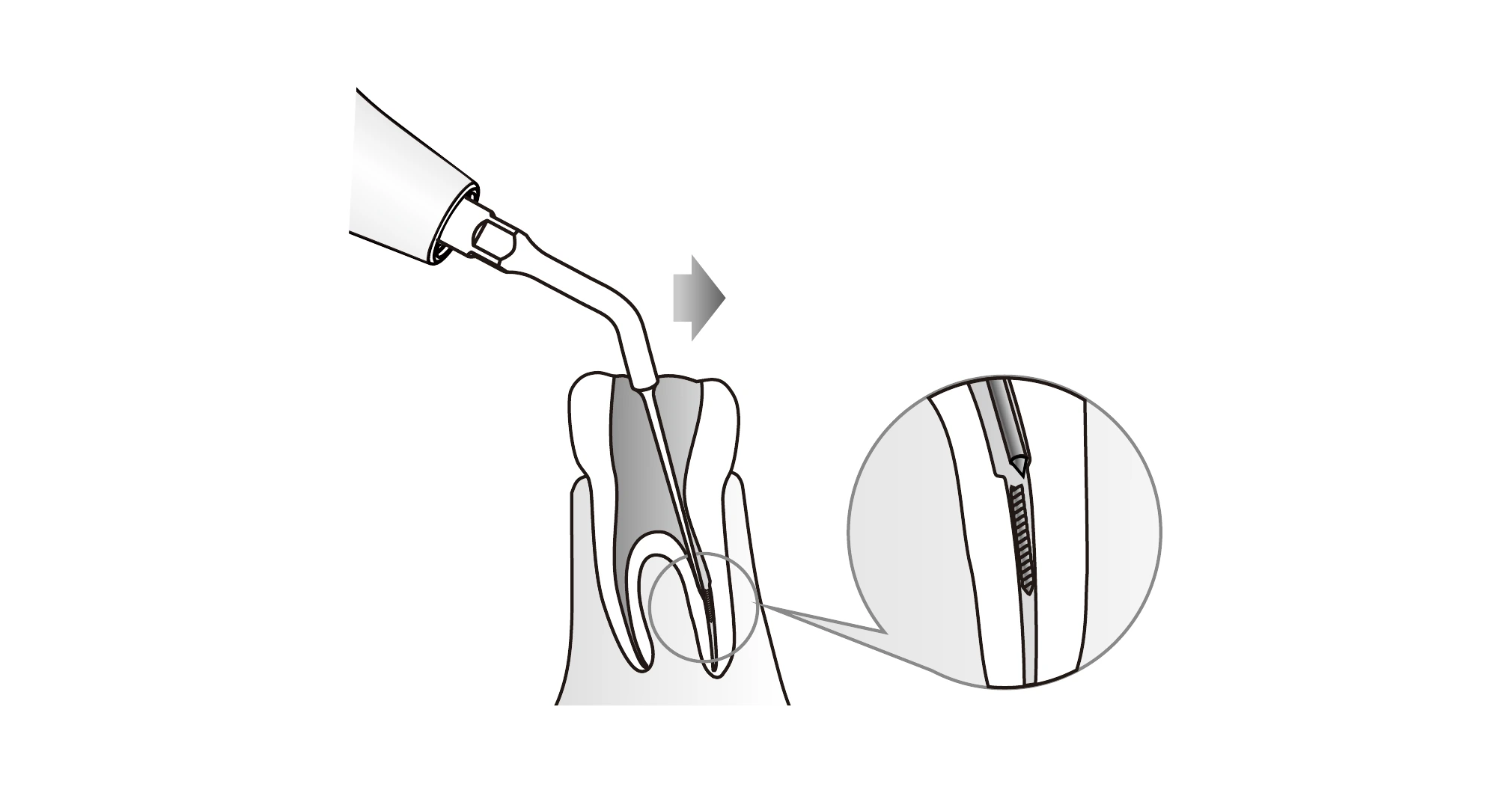
ED6 is a thin, flexible tip for removing foreign bodies from deep within the root canal. Use in E mode, within the low-to-medium power.
Mode: E Power: low–medium Irrigation: low–medium
ED7
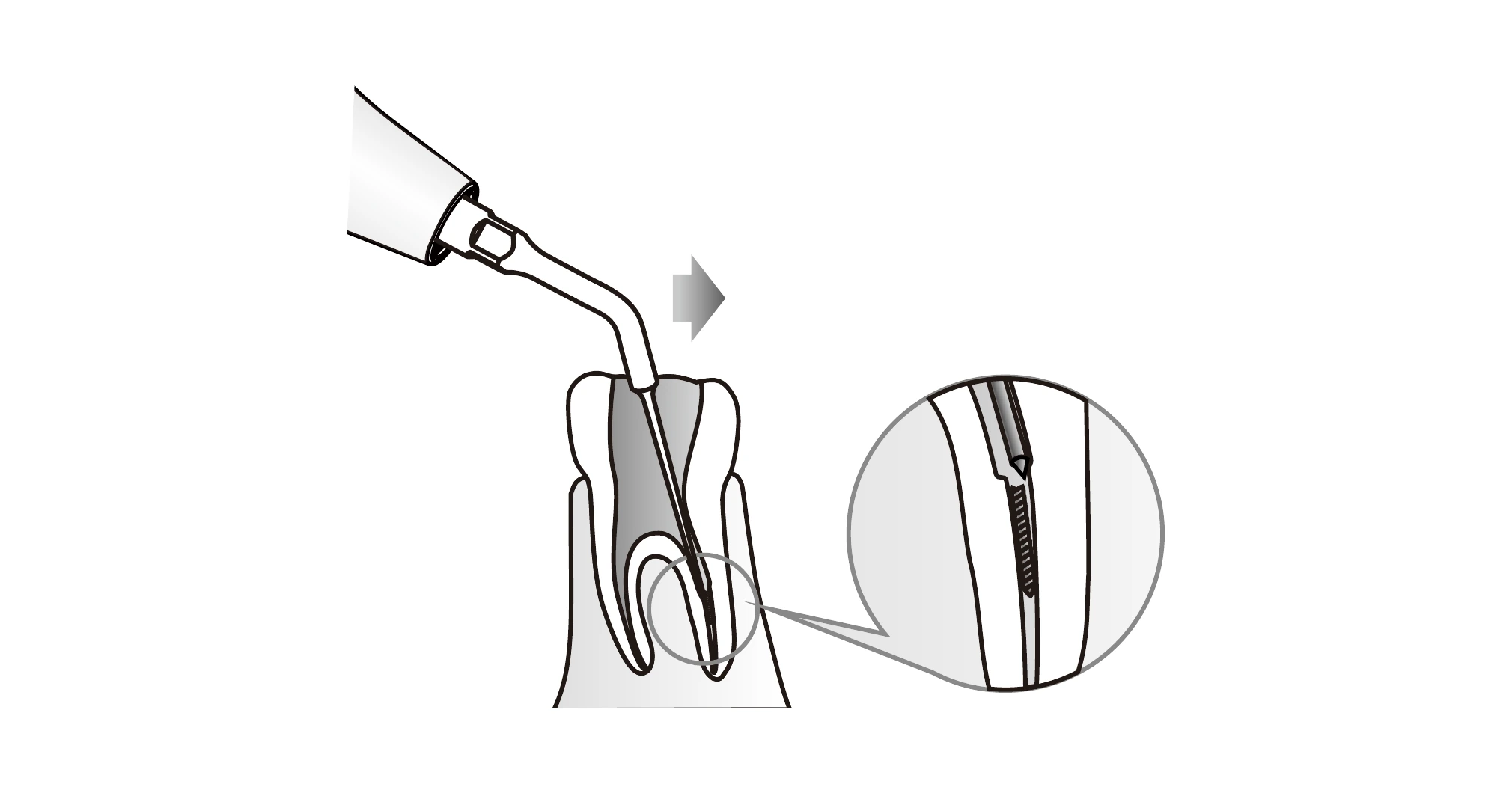
ED7 is a thin, flexible tip for removing foreign bodies in the coronal third of the root canal, as described in the catalog. Use in E mode with low-to-medium power.
Mode: E Power: low–medium Irrigation: low–medium
ED14
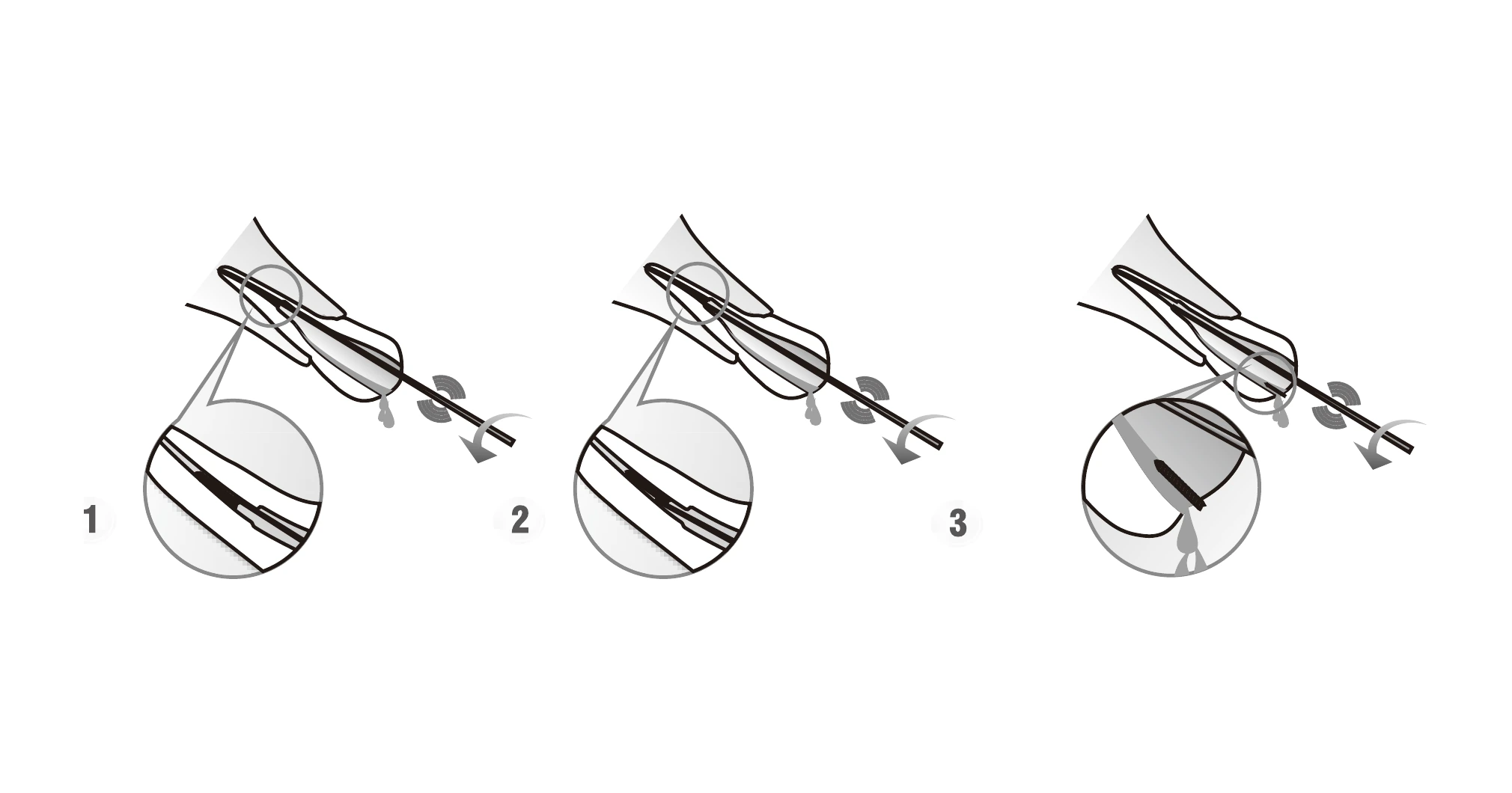
ED14 is designed for retrieving broken files from the long root canal and has a 26 mm slender section. Use E mode at low power, with medium-to-high irrigation.
Mode: E Power: low Irrigation: medium–high
ED17
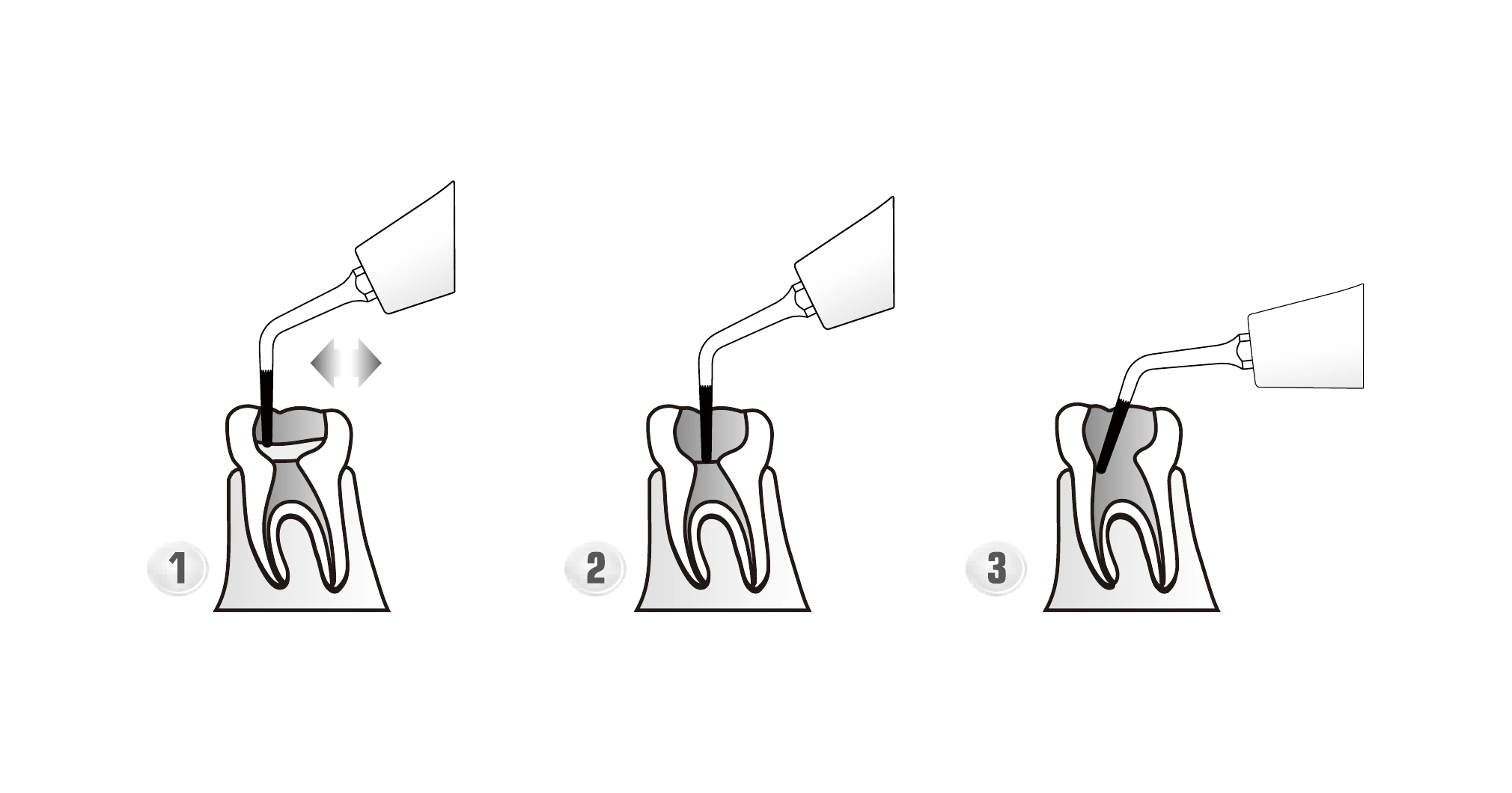
ED17 is intended for locating root canals, cleaning the pulp chamber and opening canal orifices; the catalog describes 15 micro-washers and recommends back-and-forth movement and use with a root canal microscope because of its strong cutting action. For waterless operation, work for 5–10 seconds, pause for 2 seconds, and introduce water every 60 seconds for cooling and rinsing.
Mode: E Power: low–high Irrigation: low–high
ED18
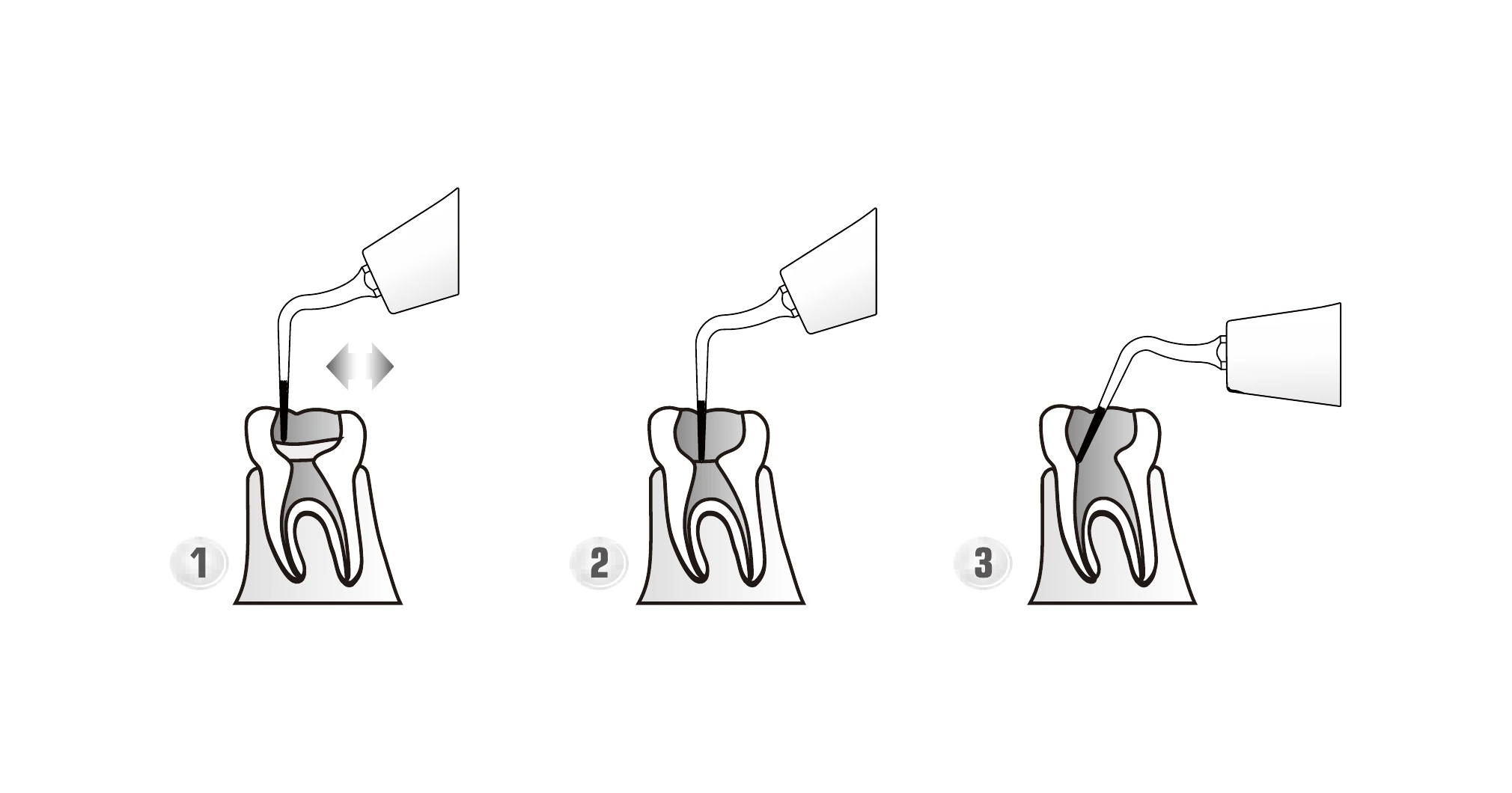
ED18 is intended for canal location and removal of dentin and calcification in the coronal third; it has 12 micro-washers, and the catalog recommends back-and-forth movement and a root canal microscope because of its strong cutting action. For waterless operation, work for 5–10 seconds, pause for 2 seconds, and introduce water every 60 seconds for cooling and rinsing. Use E mode within the low-to-high power and irrigation.
Mode: E Power: low–high Irrigation: low–high
ED28
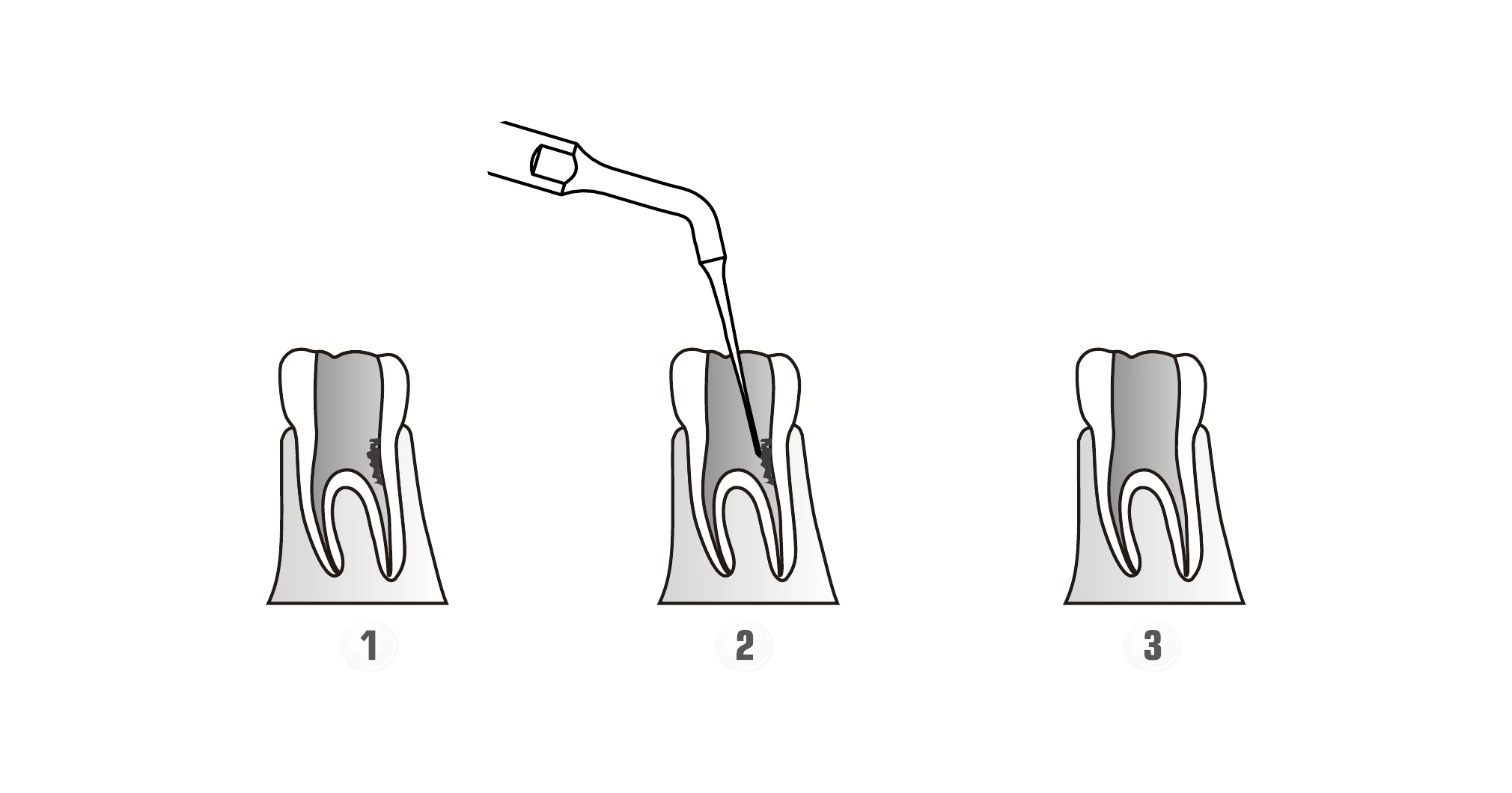
ED28 is designed to locate and negotiate the root canal orifice, with a pointed, conical end and a Ø0.25 mm cylindrical section described in the catalog. Apply only a small axial force to the active area; for waterless operation, work for 5–10 seconds, pause for 2 seconds, and introduce water every 60 seconds for cooling and rinsing. Use E mode at power level 1; the irrigation chart allows low-to-medium flow.
Mode: E Power: low; explicitly level 1 Irrigation: low–medium
ED60
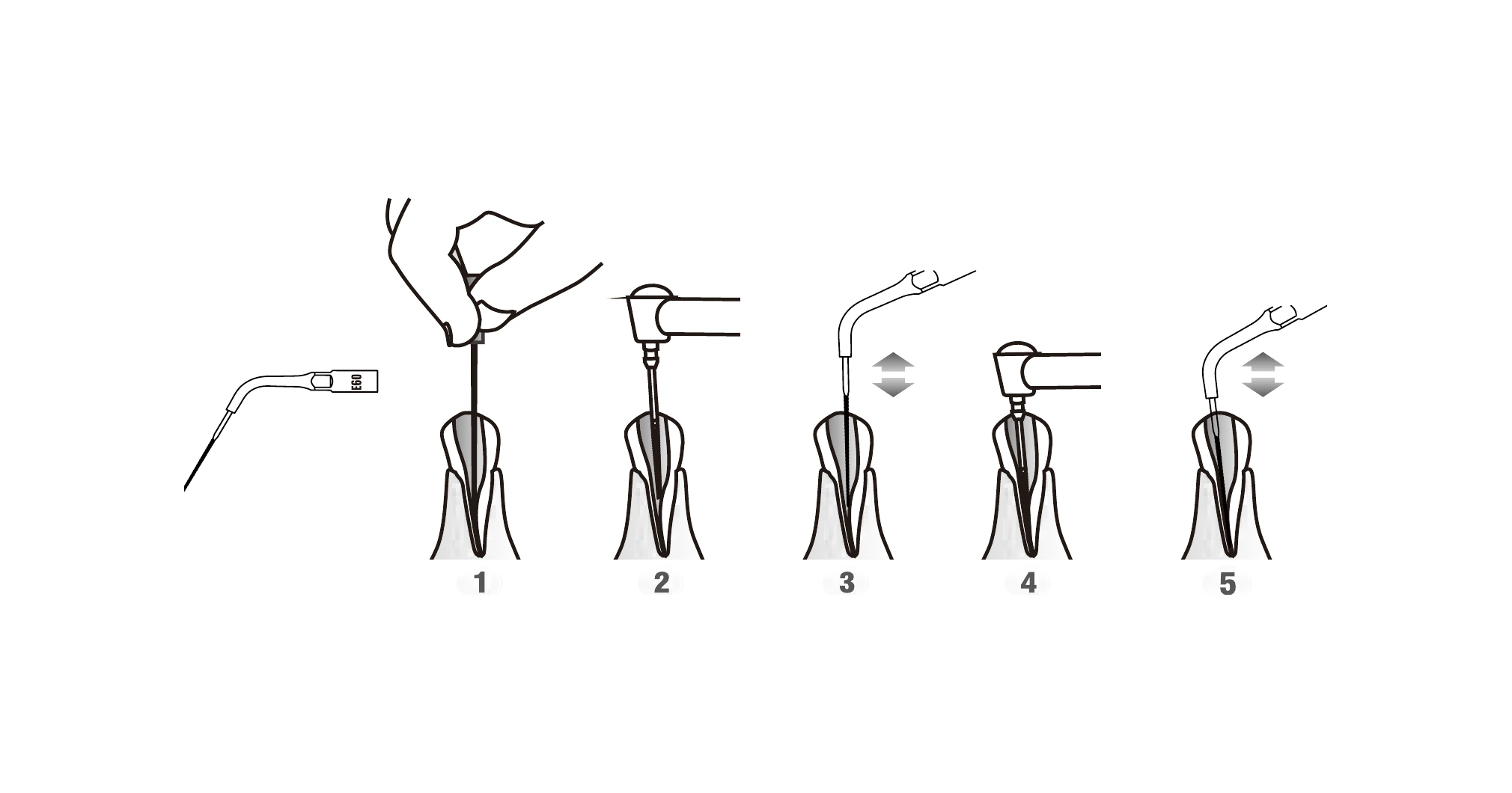
ED60 is a minimally invasive irrigation tip with a non-sharp spiral working section and essentially no cutting action. Check water delivery outside the canal starting at power level 1, then keep the tip unstressed and free from binding during three 20-second irrigation cycles, stopping to clean between cycles. Use E mode; low-power and medium-to-high irrigation, with water reaching the tip.
Mode: E Power: low Irrigation: medium–high
ED62
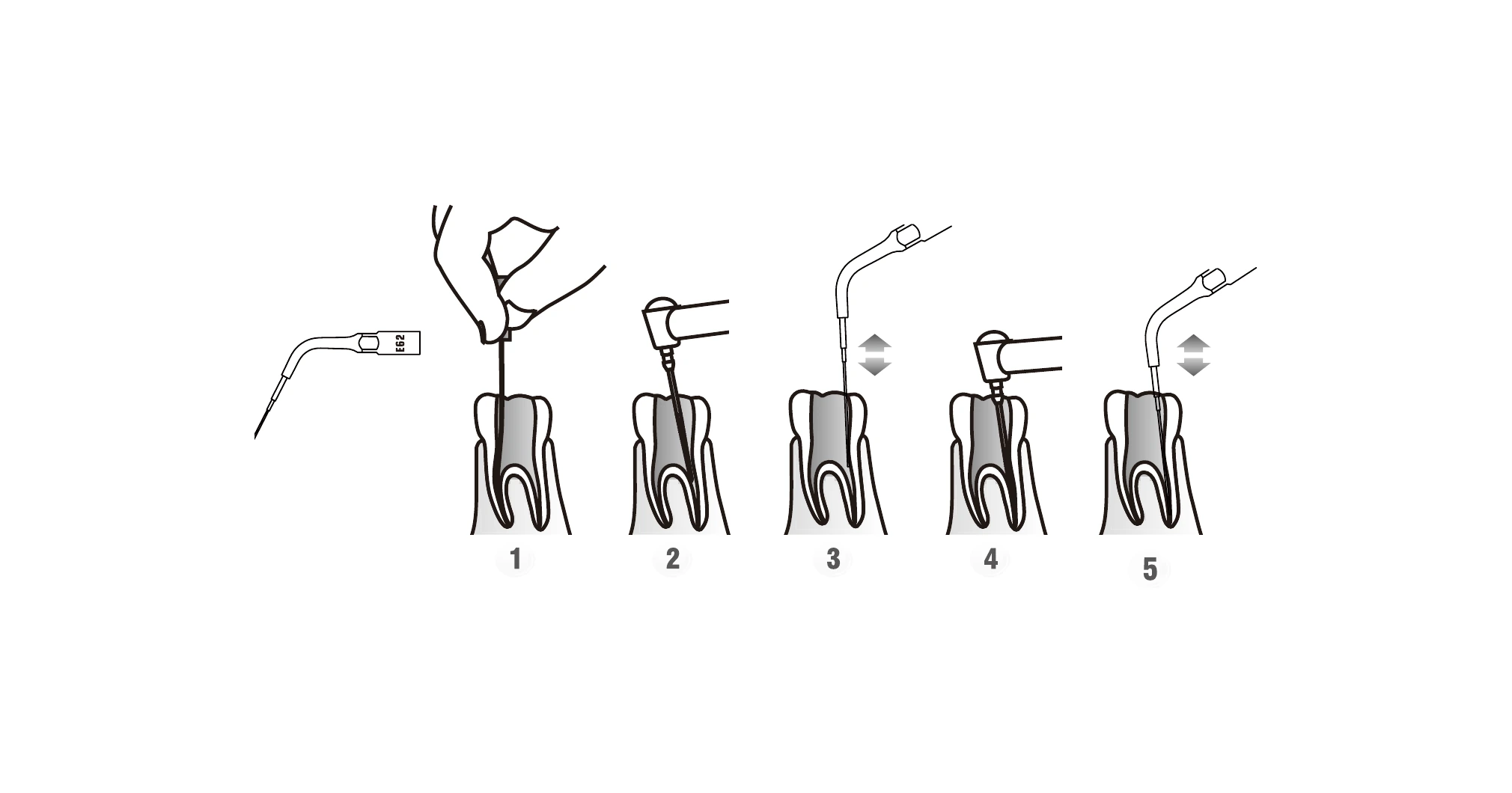
ED62 is intended for irrigation after root canal preparation and has a Ø0.3 mm, zero-taper working section measuring 16 mm. Check water delivery outside the canal at power level 1, keep the tip unstressed and free from binding, and irrigate in three 20-second cycles with cleaning between cycles. Use E mode within the stated power range of 1–3 and the chart’s medium-to-high irrigation band, ensuring water reaches the tip end.
Mode: E Power: low; levels 1–3 Irrigation: medium–high
ED3D
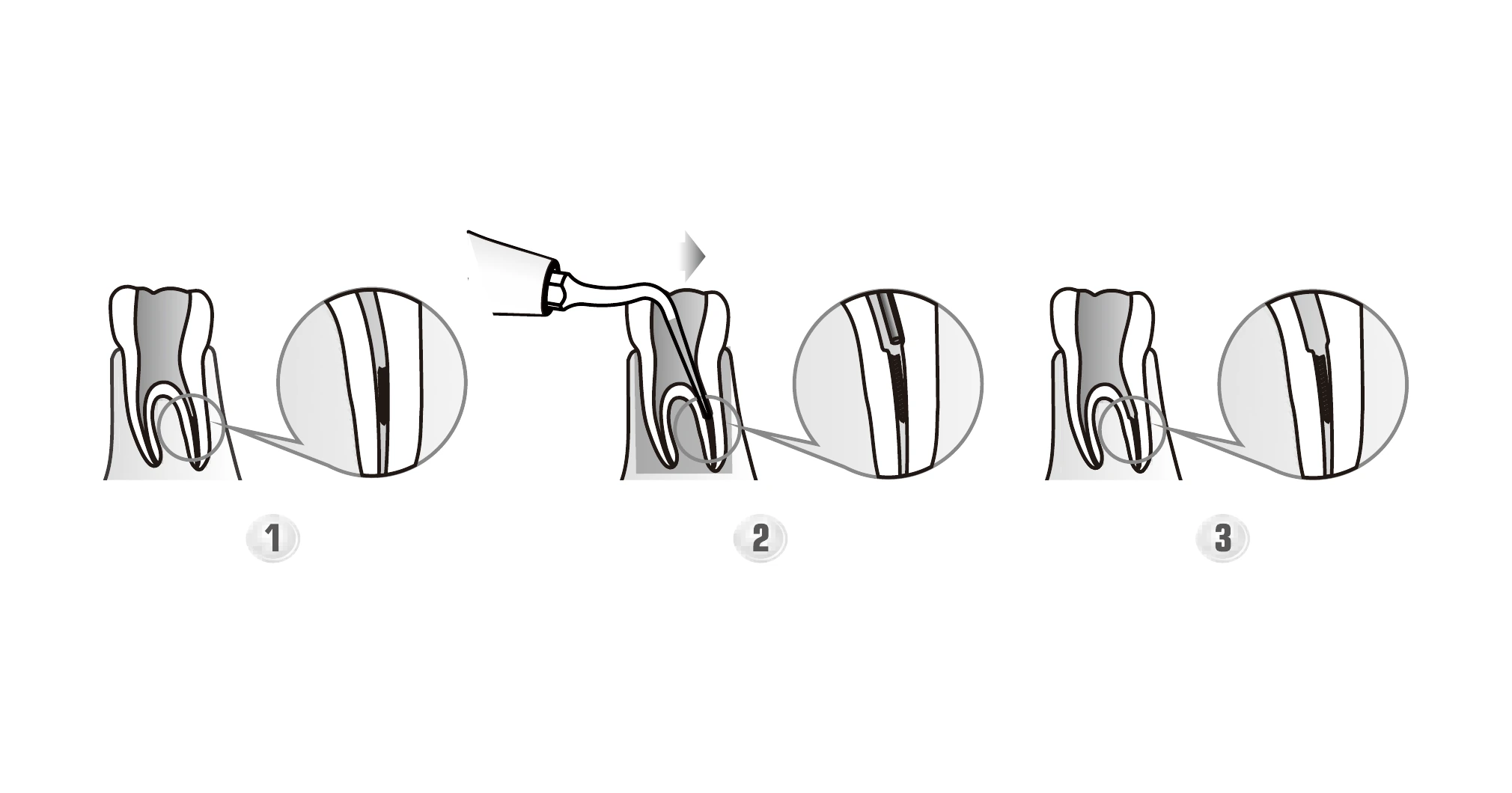
ED3D is intended for removing calcification and poor filling material from the cavity, and for removing pulp chamber overhangs. Use E mode within the low-to-medium power range; the irrigation chart permits low-to-high flow.
Mode: E Power: low–medium Irrigation: low–high
ED4D
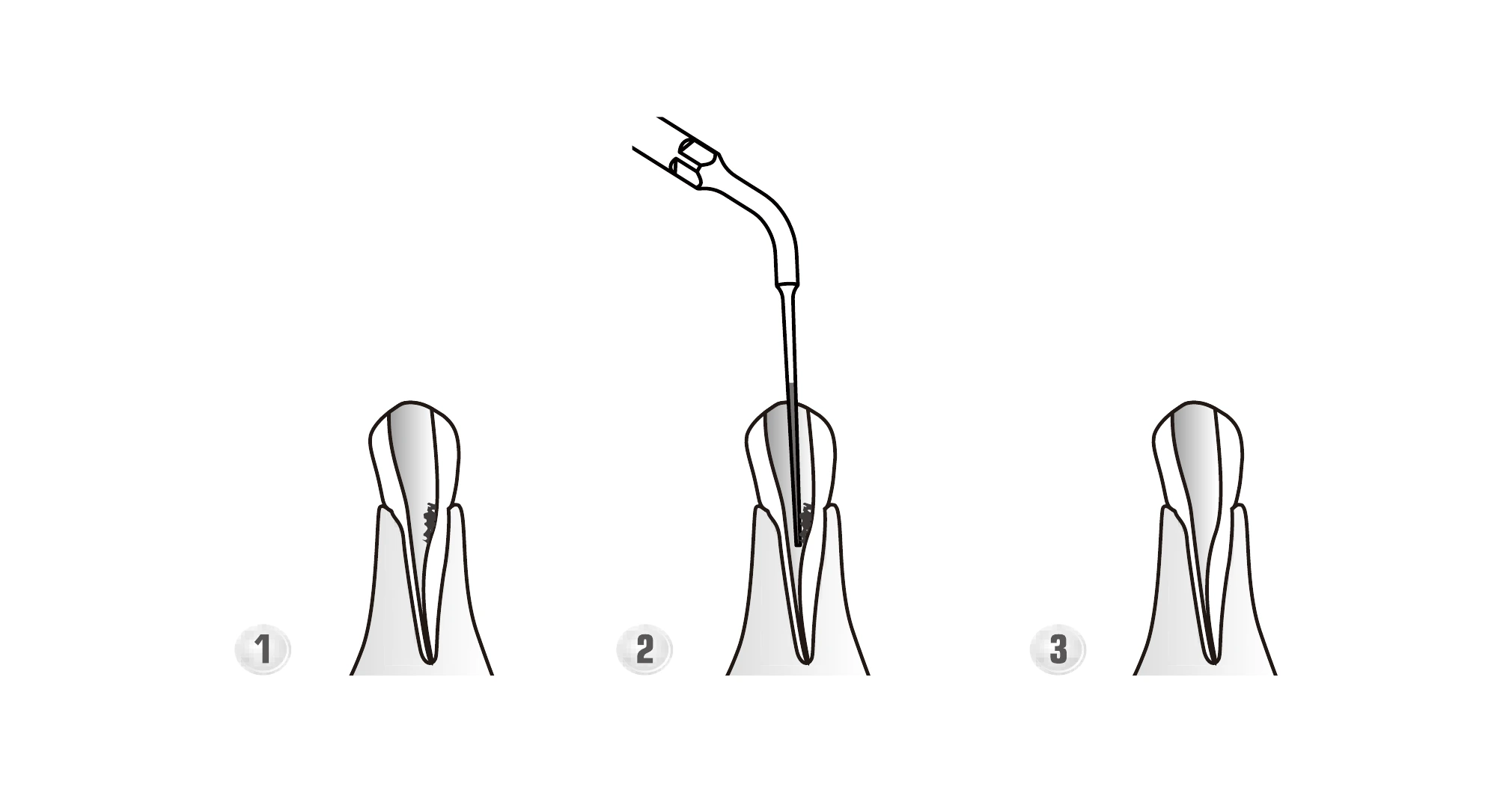
ED4D is a 40 μm diamond-coated instrument for removing calcification and poor filling material during root canal retreatment. Its diamond-coated working section is 15 mm long. The catalog specifies E mode, low power and no irrigation in its settings chart.
Mode: E Power: low Irrigation: off
PD4D
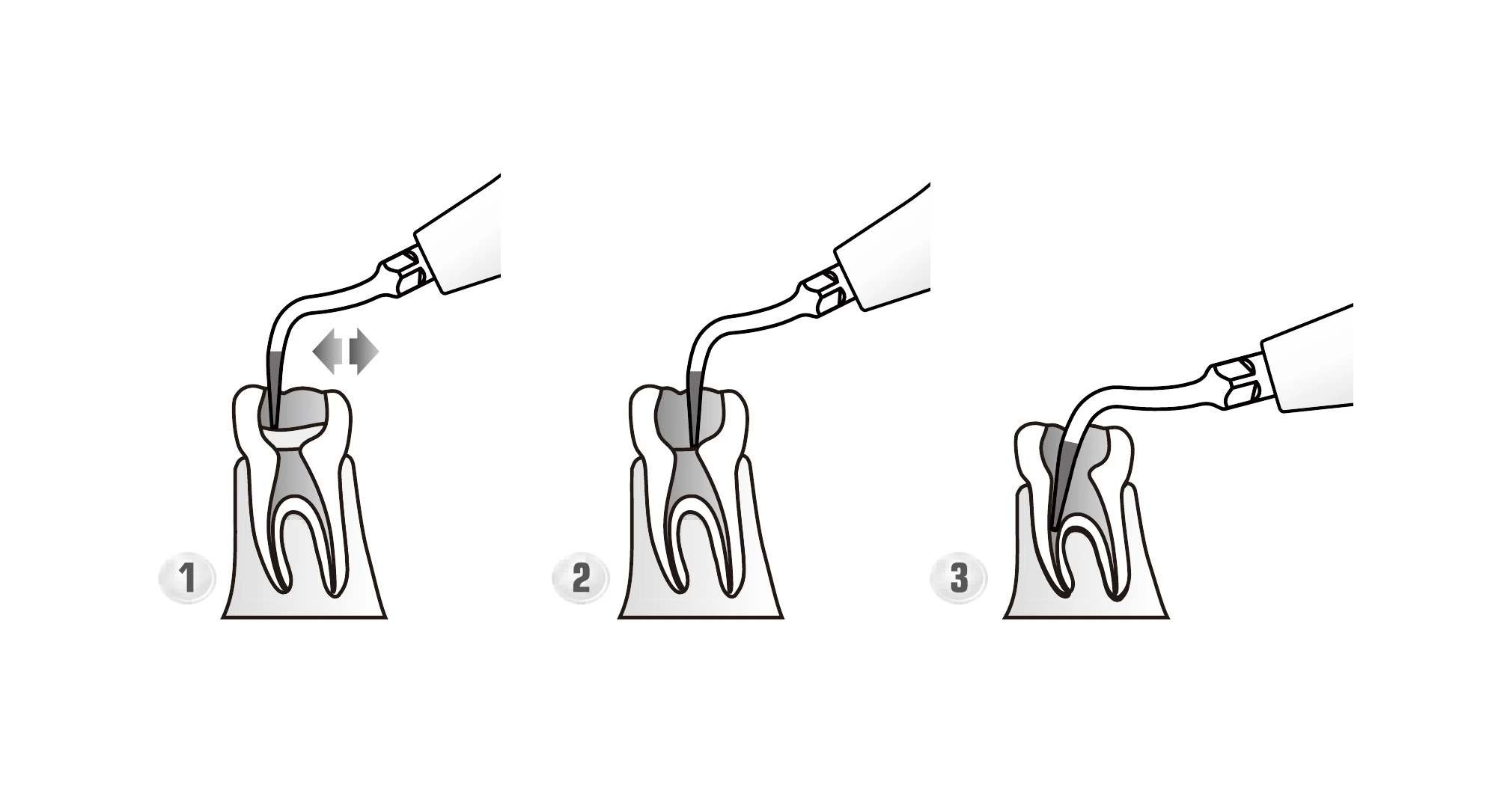
PD4D is a 40 μm diamond-coated instrument for root canal orientation and for removing calcifications within one-third of the canal. Avoid excessive pressure to prevent damage to the root canal. Use E mode within the low-to-medium power band; the irrigation chart permits low-to-high flow.
Mode: E Power: low–medium Irrigation: low–high
Specification
GENERAL
Brand: Woodpecker DTE
Product Type: Endodontic ultrasonic tips
Connection: DTE / Satelec-type thread
Compatible With: DTE, NSK and Acteon Satelec scalers
Not Compatible With: EMS / Woodpecker-thread handpieces
Models: ED6, ED7, ED14, ED17, ED18, ED28, ED60, ED62, ED3D, ED4D, PD4D
Working Mode: E (endo) mode
Intended User: Dental professionals only
Package Dimensions
60.1 × 40.0 × 7.0 mm
2.37 × 1.57 × 0.28 in
Weight: 11.8 g (0.42 oz)
What's in the Box
- 1 × Woodpecker DTE endodontic ultrasonic tip (selected model)
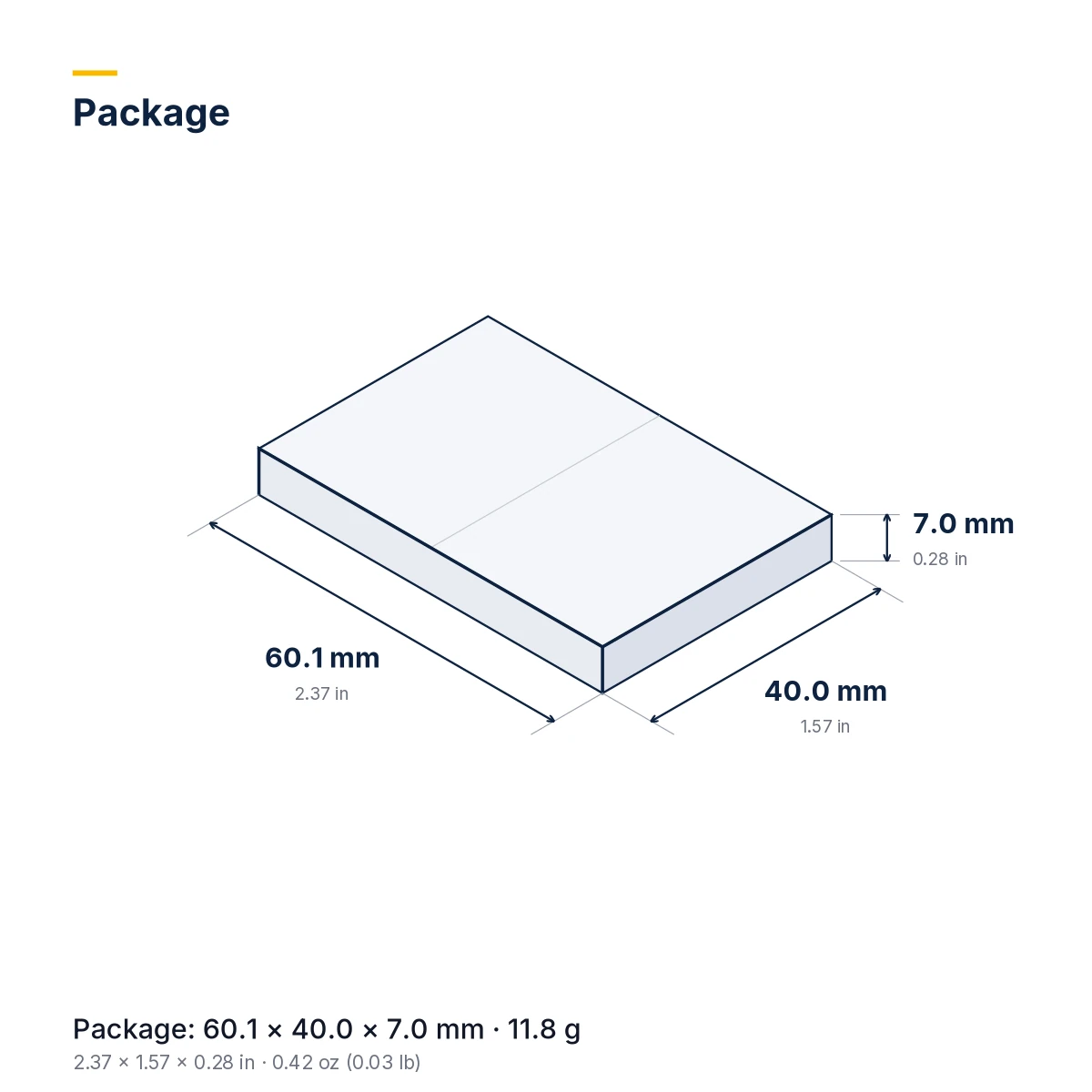
Package Dimensions
60.1 × 40.0 × 7.0 mm
6.01 × 4.0 × 0.7 cm (2.37 × 1.57 × 0.28 in)
Weight: 11.8 g (0.42 oz)
Instructions
- Use in E (Endo) mode.
- Check water flow before use.
- Irrigation tips: Use 3 cycles of 20 seconds per canal.
- Avoid applying axial pressure.
- Sterilize in an autoclave at 134°C.
- Replace tips when worn or damaged.
No in action provided for this product
Woodpecker DTE Endodontic Ultrasonic Tips FAQs
What are endodontic ultrasonic tips used for?
Endodontic ultrasonic tips have different uses depending on their design, including canal location, calcification and filling-material removal, broken-file retrieval and root canal irrigation. This Woodpecker DTE selection contains 11 models for these tasks. Choose the tip by its catalog application and compatible handpiece connection, rather than treating every endodontic tip as interchangeable.
Which handpieces are compatible with these Woodpecker DTE tips?
These tips use the DTE / Satelec-type connection for compatible DTE, Satelec/Acteon and NSK handpieces. They do not fit EMS/Woodpecker-thread handpieces. Compatibility depends on the exact handpiece model and connection, not just the brand name on the ultrasonic unit. Confirm your handpiece model before selecting or ordering a tip.
What is the difference between EMS and Satelec ultrasonic tips?
For this product range, the important difference is the handpiece connection. Standard Woodpecker E-series tips use the EMS/Woodpecker-type connection, while the ED-series and PD4D options offered here use the DTE/Satelec-type connection. Similar-looking tips or matching model numbers do not make the two thread families interchangeable. Check the exact handpiece before ordering.
Can these DTE ultrasonic tips be used with NSK or Acteon Satelec?
These DTE/Satelec-type tips are intended for corresponding compatible NSK and Satelec/Acteon handpieces. This is not a guarantee that every device from either brand accepts every tip. Match your precise handpiece model and connection to the selected tip, and follow the applicable device instructions for installation and operation.
How do I choose the right ultrasonic endo tip model?
Start with the procedure: ED6 and ED7 are for foreign-body removal; ED14 is for broken files; ED17, ED18 and ED28 support canal location or access-related tasks. ED3D, ED4D and PD4D have calcification-related applications. ED60 and ED62 are irrigation tips. Then confirm the connection and review the individual model instructions.
Which ultrasonic tip is intended for broken file removal?
ED14 is the model in this selection specifically described for removing broken files from the root canal. Its slender section is 26 mm long. The catalog specifies E mode, low power and medium-to-high irrigation, and warns against axial pressure that could push the fragment deeper. Retrieval requires appropriate professional technique and the applicable device instructions.
What is the ED4D ultrasonic tip used for?
ED4D is a diamond-coated tip for removing calcification and defective filling material during root canal retreatment. The catalog specifies a 40 μm diamond coating and a 15 mm diamond-coated section. Its settings chart shows E mode, low power and irrigation off. These model-specific settings should not be generalized to other tips.
What does the final D mean in ED3D, ED4D and PD4D?
The final D identifies a diamond-coated model in this selection. ED3D, ED4D and PD4D are the diamond-coated options offered here. This suffix is separate from the ED connection-family designation: ED6, for example, is a DTE-type model but does not have the additional diamond-coating suffix. Select the coating and geometry for the intended task.
What is the difference between ED6 and ED7?
Both ED6 and ED7 are thin, flexible tips intended for foreign-body removal. The catalog describes ED6 for deep canal use and ED7 for use in the coronal third of the canal. Both charts show E mode with low-to-medium power and irrigation. Select according to the clinical task and manufacturer instructions.
What is the ED17 tip used for?
ED17 is intended for root canal detection, pulp chamber cleaning and opening canal orifices. The catalog describes 15 micro-washers and recommends back-and-forth movement. Because of its strong cutting action, use with a root canal microscope is recommended. Its chart shows E mode with low-to-high permitted power and irrigation bands, not a direction to use maximum settings.
What is the difference between ED17 and ED18?
ED17 is described for canal detection, pulp chamber cleaning and orifice opening, with 15 micro-washers. ED18 has 12 micro-washers and is described for canal location and removal of dentin and calcification in the coronal third. Both have strong cutting action, and the catalog recommends a root canal microscope and back-and-forth movement.
What is the ED28 ultrasonic tip used for?
ED28 is designed to locate and negotiate the root canal orifice. It has a pointed, conical end; the catalog describes a Ø0.25 mm cylindrical section behind the tip extremity. Its instructions specify E mode at power level 1 and only a small axial force. The irrigation chart shows the low-to-medium flow band.
What is the ED3D tip used for?
ED3D is intended for removing calcification and defective filling material in the cavity and for removing pulp chamber overhangs. Its settings chart shows E mode, low-to-medium power and low-to-high irrigation. The catalog use page does not give a diamond-grit size or coating length, so those measurements should not be assumed from another model.
What is the PD4D ultrasonic tip used for?
PD4D is a 40 μm diamond-coated instrument for root canal orientation and removal of calcification within one-third of the canal. The catalog does not identify which third. It warns against excessive pressure. Its settings chart shows E mode, low-to-medium power and low-to-high irrigation; consult the device instructions before use.
Which tips in this range are intended for root canal irrigation?
ED60 and ED62 are the dedicated irrigation options in this selection. ED60 has a non-sharp spiral working section with essentially no cutting action. ED62 is described for irrigation after canal preparation and has a smooth Ø0.3 mm, zero-taper working section measuring 16 mm. Each model has its own permitted power range.
What is the difference between ED60 and ED62 irrigation tips?
ED60 has a non-sharp spiral working section; its instructions permit power adjustment within levels 1–6. ED62 has a smooth Ø0.3 mm, zero-taper, 16 mm working section and a stated power range of 1–3. Both require water delivery checks outside the canal and an unstressed tip that remains free from binding.
How long should ED60 or ED62 irrigation cycles last?
For ED60 and ED62, the catalog describes three 20-second irrigation cycles, stopping to clean the root canal between cycles. Before starting, check water delivery outside the canal at power level 1 and ensure water reaches the tip end. Keep the tip unstressed and avoid binding while it vibrates inside the canal.
How long do ED60 and ED62 ultrasonic tips last?
The catalog gives a recommended service life of 30–50 root canals for ED60 and ED62 when used according to its recommended method. This is model-specific guidance, not a guaranteed lifespan or a replacement schedule for the other nine tips. Follow the applicable inspection, maintenance and replacement instructions for the tip and device.
What power settings should I use for these endodontic ultrasonic tips?
All 11 model charts show E mode, but their power recommendations differ. ED14 and ED4D show low power; ED28 explicitly specifies level 1. ED60 permits levels 1–6 and ED62 levels 1–3 in their written instructions. The catalog’s low, medium and high bands are not universal numerical settings for every ultrasonic unit.
Do all endodontic ultrasonic tips need irrigation?
No single irrigation setting applies to all these models. ED4D’s catalog chart shows irrigation off, while other models show different permitted flow bands. ED17, ED18 and ED28 include model-specific intermittent waterless-use instructions. Do not apply one tip’s dry-use protocol to another; follow the individual tip guidance and compatible device instructions.
Can ED17, ED18 and ED28 be used without continuous water?
Their catalog instructions describe intermittent waterless operation: work for 5–10 seconds, pause for 2 seconds, and introduce water every 60 seconds for cooling and rinsing. This is specific guidance for these models, not blanket permission for dry ultrasonic use. Confirm the applicable device instructions and use the model-specific power recommendation.
How far should an ultrasonic endodontic tip be inserted into a canal?
The catalog does not provide one insertion depth for all 11 tips. Choose the model for its intended task and follow its instructions rather than inserting every tip to the same depth. For ED60 and ED62 irrigation, the catalog specifically says to keep the working tip unstressed and prevent it from binding while vibrating.

Reviews
There are no reviews yet.